ConverTools

Convert any unit online

What Is the Difference Between Weight and Mass?

In ordinary conversation, the terms “weight” and “mass” are used interchangeably, however, these two words don’t mean the same thing. The difference between weight and mass is that weight is a measure of how the force of gravity acts upon the mass, whereas mass is the amount of matter in a material.

Mass is the measure of the amount of matter in a body and it is denoted using m or M. The weight of an object is the force exerted on the object because of gravity. Weight is usually denoted by W. Weight is mass multiplied by the gravity (g) acceleration. W=m∗g

Convert gallons to cubic meters
What Is the Difference Between Weight and Mass?

Comparing Weight and Mass

Mainly, when comparing weight and mass on Earth (without moving), the values for weight and mass are the same. The mass will remain unchanged, but the weight will not if you change your location with respect to gravity. For instance, the mass of your body is a set value, but your weight is different on the Moon in comparison to Earth.

– Weight depends on the effect of gravity. With higher or lower gravity the weight increases or decreases.

– Mass is a property of matter. The mass of the body stays unchanged everywhere.

– If no gravity acts upon an object, as in space, weight can be zero.

– Mass can never be zero.

– Weight varies according to location.

– Mass does not transform according to location.

– Weight has magnitude and is directed toward the center of the Earth or other gravity well. Weight is a vector quantity.

– Mass is a scalar quantity. It has magnitude.

– In order to measure the weight spring balance is used.

– The mass is measured using an ordinary balance.

– Weight is usually measured in newtons, a unit of force.

– Mass is typically measured in kilograms and grams.

Convert liters to ounces

How Much Do You Weigh on Other Planets?

The acceleration due to gravity and weight varies dramatically, while a person’s mass doesn’t change elsewhere in the solar system. The calculation of gravity on other bodies, as on Earth, besides depending on mass depends on how far the “surface” is from the center of gravity. For instance, on Earth, your weight is barely lower on a mountaintop than at sea level. The effect becomes especially impressive for large bodies, like Jupiter. While due to Jupiter’s mass, gravity exerted by it is 316 times greater than that of Earth, you wouldn’t weigh 316 times more because its “surface” [or the cloud level] is far out from the center.

Different celestial bodies have different gravity values than Earth does. Simply multiply by the appropriate number in order to get your weight. For instance, on Jupiter, a 135-pound individual would weigh 356.4 pounds or 2.64 times their weight on Earth.

What Is the Difference Between Weight and Mass?

Body     Multiple of Earth Gravity     Surface Gravity (m/s2)

Sun                      27.90                                      274.1

Mercury              0.3770                                    3.703

Venus           0.9032                                          8.872

Earth             1 (defined)                           9.8226

Moon            0.165                                             1.625

Mars             0.3895                                            3.728

Jupiter          2.640                                             25.93

Saturn           1.139                                             11.19

Uranus         0.917                                             9.01

Neptune                    1.148                                              11.28

You may be stunned by your weight on other planets. It makes sense that a person would weigh identically on Venus because that planet is almost the same size and mass as Earth. Yet, it may seem weird that you’d actually weigh less on the Uranus (gas giant). Your weight would be only barely higher on Neptune or Saturn. Your weight would remain about the same although Mercury is much smaller than Mars. The Sun is much more massive than any other body, however, you would weigh about 28 times more.

Check out our converter and use it for free

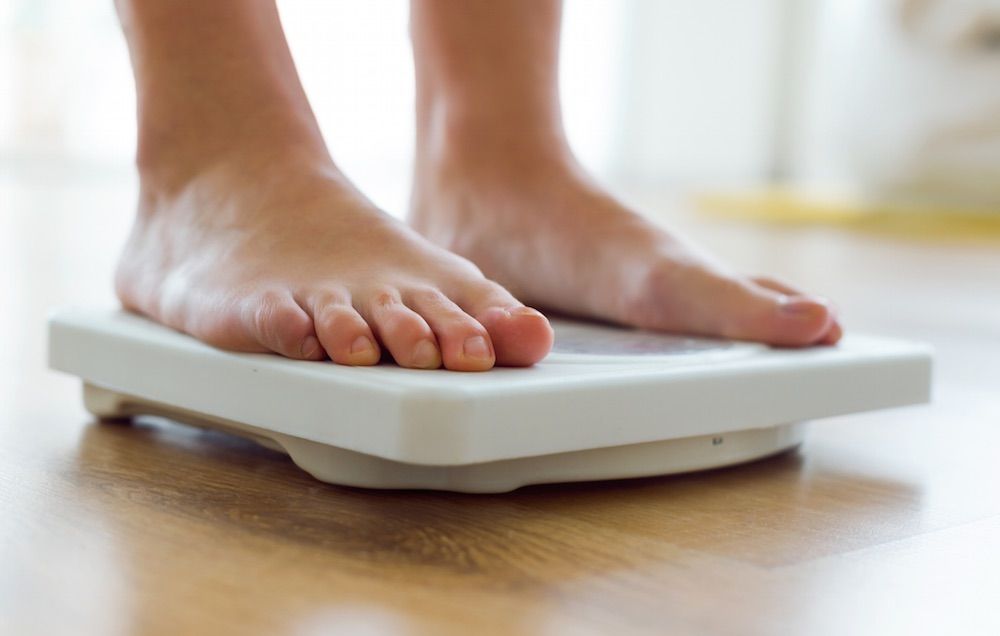
How To Weigh Yourself

When Is the Perfect Time to Weigh Yourself and Why?

Consistency is key to accurately monitoring your weight

If you want to know whether you are gaining, losing, or maintaining weight, the best period to weigh yourself is the same time you weighed yourself the previous time.

Consider that over the course of a day your weight fluctuates. You do not want to compare how much you weigh first thing in the morning with your weight in the afternoon directly following eating lunch, it is not the correct way to track your weight.

In order to learn best practices for keeping track of your weight, keep reading this article.

Convert gallons to cubic meters

How To Weigh Yourself

Morning is good, but steadiness is key

If you want to choose a concrete time of day to steadily weigh yourself, consider the morning, after you empty your bladder.

Morning is normally the end of the longest period of your day in which you have not eaten food or participated in vigorous exercise.

Factors such as exercise or what you ate the day before don’t have a meaningful impact if you weigh yourself when you first get up in the morning.

Use a precise weighing device

Consistency in weighing yourself is not restricted to the period of day you weigh yourself.

Consider the equipment you’re using and what else you’re weighing [such as clothing] for better measurement of your weight and its fluctuations.

Some scales are more precise than others.

Request for a recommendation from:

  • your healthcare provider
  • personal trainer
  • a knowledgeable friend

The Centers for Disease Control and Prevention (CDC) Trusted Source suggests getting a digital scale as opposed to a spring-loaded scale. You can also research sites that include ratings and buyer feedback.

Check out our converter for free

How To Weigh Yourself

Use your equipment accurately

Avoiding carpeting or uneven flooring, put your scale on a hard, flat, level surface. The easiest way to calibrate it, after setting it in place, is to adjust the weight to precisely 0.0 pounds with nothing on it.

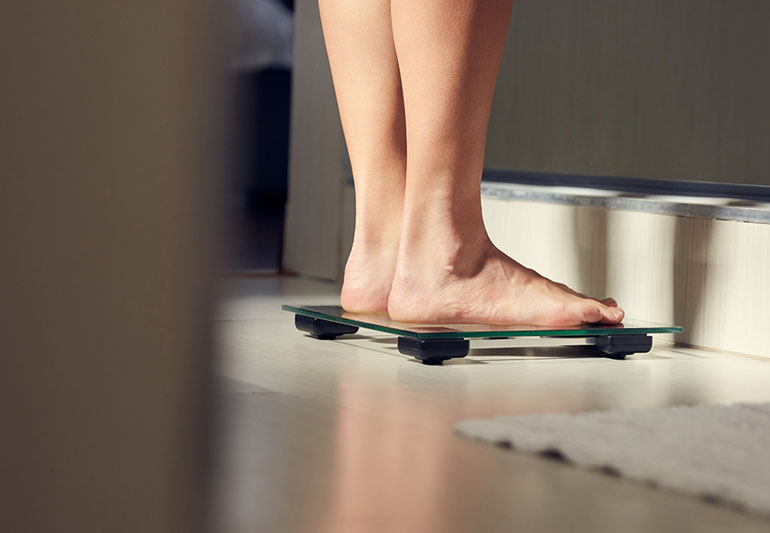
When weighing yourself in the morning, for consistent measurement, weigh yourself after using the restroom and while standing motionless, which identically distributes your weight on both feet.

Do not weigh yourself elsewhere

Now that you have an adequate scale that is appropriately set up, use it. More significantly, only use this scale, do not weigh yourself elsewhere.

Your scale will be consistent even if it is slightly off. Any changes will display a factual alteration from the same source.

To put it in another way, any difference will be a reflection of a true change in weight, not a change in the weighing device.

It is necessary to remember that equipment may not always be correct in presenting weight measurements.

Convert cubic yards to cubic feet

Try to always weigh the same thing

After choosing a scale you are sure about, try to always weigh the same thing when you weigh yourself.

Presumably, the most easiest and consistent approach to weighing yourself is getting on the scale unclothed.

If that is not an alternative, try to be consistent in your clothes. For instance, try to wear the same shoes every time you weigh yourself if you must wear shoes.

You must also take into consideration that the scale will measure the liquid and food you have recently consumed.

Generally, you weigh more after dining. You will typically weigh less after strenuous physical activity because of the water you have lost through sweating. Therefore, the best time to weigh yourself is in the morning before you have eaten or exercised.

For the majority of people, doing their weight measurement in the morning makes it convenient to undress and step onto the scale.

How To Weigh Yourself

The key takeaway:

In order to get the best results consistency is key to accurate weight measurement.

  • Weigh yourself at the same time every day [morning is best, after using the bathroom].
  • Use a quality weighing device that is set up adequately.
  • Use only one scale.
  • Weigh yourself unclothed or wear the same thing for every weight measurement.

Weight of a Gallon of Water

How Much Does a Gallon of Water Weigh?

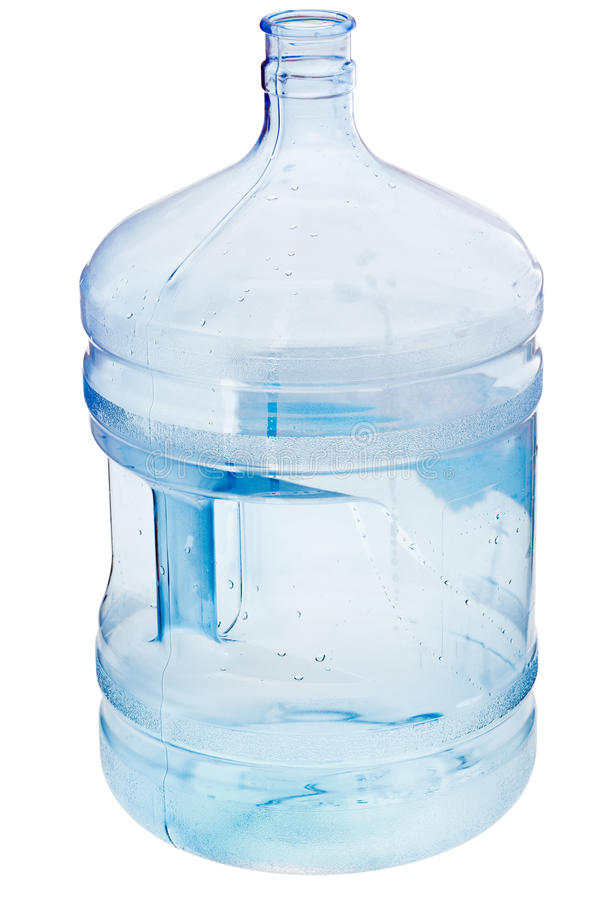
One gallon (US) of water, at room temperature, weighs approximately 3.78 kilograms or 8.33 pounds. According to the water density level, the precise weight of it differs. Water density depends on its storage temperature.

Weight of a Gallon of Water

Click here to convert Gallons to Cubic Feet

How Much is a Gallon of Water?

We need to be clear about what a gallon actually is if we’re talking about the weight of a gallon of water.

In the United States, a gallon is equivalent to 128 fluid ounces or 3.785 liters.

In the United Kingdom, however, a gallon is equivalent to 160 fluid ounces or 4.546 liters.

In this article, we are going to focus on the American gallon [128 fl oz].

How Much Does Water Weigh?

People usually go by the rule that a liter of water weighed a kilogram. The beauty of the metric system is in its tidiness: 1 cubic centimeter of water is 1 milliliter and weighs 1 gram. So 1 liter of water [1000 milliliters] weighs 1 kilogram [1000 grams].

What is the Weight of 1 Gallon of Water?

A United States gallon of water weighs approximately 8lb, but the precise measurement really depends on a couple of environmental aspects that we will walk you through now.

Convert Gallons to Cubic Meters here

What Changes the Weight of Water?

As you are aware, water can change its state from boiling water on the hob or freezing it into cubes. These are extreme examples, but even mild changes in temperature do have an impact on the behavior, and thus the weight, of water.

Likewise, as the weight of water would be different at the bottom of the ocean, on land, or on the moon, atmospheric differences have an effect on its mass.

Weight of a Gallon of Water

Convert 1 liter to oz here

How Does Temperature Affect the Weight of Water?

Energy increases when water is heated up. An increase in temperature caused the water molecules to accumulate energy and move faster, which results in water molecules that are farther apart and an increase in water volume. So, the amount of space each molecule now requires is greater. Hence, increasing the energy [i.e. heat] of water decreases its density, and molecules become more spaced out.

Accordingly, if you have a gallon pitcher that you fill with cold water from the tap, it will weigh more than a pitcher of boiling water. More molecules fit in a given space [the gallon pitcher] than would be in the hot water because the density of the cold water is greater. In other words, hotter water weighs less, and colder water weighs more.

Using a pint glass, an experiment was made, and the result was that a pint of cold water weighed 560g, but a pint of hot water weighed just 530g. So, less hot water fits in the glass.

Find out here how to convert Cubic Yards to Cubic Feet

How Much Does a Gallon of Water Weigh?

Water is most dense when it is at 4ºC or 39.2ºF. A gallon of water, at this temperature, weighs approximately 8.345lb. If you turn the heating way up to 200ºF, then a gallon of water will weigh about 8.04lb. At room temperature [21°C or 70°F], a gallon of water weighs 8.33lb [3.78kg].

Convert various units of measure here

Convert Hectograms To Kilograms

Please enter a value below to convert hectograms to kilograms: In order to do a reverse conversion from kilograms to hectograms clear values…

Convert Kilograms To Hectograms

Please enter a value below to convert kilograms to hectograms: In order to do a reverse conversion from hectograms to kilograms clear values…

Convert Hectograms To Grams

Please enter a value below to convert hectograms to grams: In order to do a reverse conversion from grams to hectograms clear values…

Convert Grams To Hectograms

Please enter a value below to convert grams to hectograms: In order to do a reverse conversion from hectograms to grams clear values…

Convert Decigrams To Grams

Please enter a value below to convert decigrams to grams: In order to do a reverse conversion from grams to decigrams clear values…

Convert Grams To Decigrams

Please enter a value below to convert grams to decigrams: In order to do a reverse conversion from decigrams to grams clear values…

Convert Kips To Pounds

Please enter a value below to convert kips to pounds: In order to do a reverse conversion from pounds to kips clear values…